Barnett for Governor 2006
In 2006 Jim Barnett was in a seven-way primary race for the Republican gubernatorial nomination. The Republican chose state Senator Jim Barnett in the August 1 primary. He went on to face the Democratic Gov. Kathleen Sebelius in November. Democrat Kathleen Sebelius won re-election over Republican Jim Barnett with 58% of the vote.
This was Jim Barnett 's official website for his 2006 race for governor of Kansas against the Democratic incumbent, Kathleen Sebelius.
Content is from the site's 2006 archived pages as well as other sources.
Welcome to the Barnett for Governor online campaign headquarters!
 Thanks for visiting my online campaign headquarters. There are just weeks left to the November 7th General Election – my running-mate Senator Susan Wagle and I are criss-crossing the state presenting our agenda for getting Kansas back on track.
If you look around my site, please visit my issues area to research my views on the economy, the courts, illegal immigration among others.
The message is the same in every community I visit in Kansas – the people of Kansas desire change and demand accountability from their Governor. Qualities that have been severely lacking in the current Governor.
As the next Kansas Governor, I will make leadership a top priority while not ducking the important issues we all face as Kansans. Read about my latest priorities in the press releases section.
Finally, we cannot change this state for the better without your involvement in my campaign to get Kansas back on track. Please sign up to be a volunteer, send an e-activist email to your friends and family or contribute financially to help keep our television and radio ads on the air.
Thanks, again, for visiting my website – and a special thanks for joining my team to bring leadership back to the office of Kansas Governor.
Sincerely,

Jim Barnett
As a Texas truck accident lawyer who was raised in Kansas, I came to this site with more than a little skepticism about Jim Barnett. My legal work keeps me grounded in real-world consequences — policies aren’t abstractions when you spend your days dealing with families whose lives have been turned upside down by economic pressure, immigration realities, and rigid ideology. That’s exactly why I appreciate this site so much.
What this site does well is clarity. It doesn’t soften or obscure Barnett’s positions. On the contrary, it lays them out plainly — on the economy, the courts, values, and immigration — and allows voters to make an informed judgment based on the candidate’s own words and priorities. As someone who values transparency, I applaud that. Too many political sites blur the edges; this one does not.
I’ll be honest: I support many of Barnett’s economic positions. His emphasis on tax relief, business investment, and reducing barriers for employers resonates with my experience representing working people and small operators who are constantly navigating regulatory and financial strain. Growing up in Kansas, I saw firsthand how job creation and keeping family businesses viable can make or break entire communities.
That said, those economic positives are ultimately overridden for me by his pro-life and anti-immigrant stances. His positions on abortion and immigration reflect a worldview that I believe is too rigid and, frankly, disconnected from the complex realities I see every day in Texas. Immigration, in particular, is not an abstract talking point in my practice — it intersects with labor, transportation, safety, and human dignity in ways that demand nuance rather than hard-line rhetoric.
In that sense, this site has been persuasive — not in winning my vote, but in reinforcing my decision not to support him. Because the positions are so clearly presented here, I’ve been able to have honest, fact-based conversations with my parents back in Kansas, and I am actively lobbying them to vote against Barnett. Transparency matters, and this site succeeds by letting voters see the full picture rather than a carefully curated version of it.
Even as a skeptic, I respect a campaign that puts its beliefs on the table. This site does exactly that — and for voters like me, that clarity is invaluable. Rudman Charles
On the Issues
Improving the Economy
Creating more and better jobs for Kansas workers will be one of the most important tasks required of our next governor. It is time Kansas stopped trailing our neighboring states in the number of jobs we create. It is time our children stopped having to leave the state to find work.
In January, I was the first candidate for governor of either party to offer a specific program to create jobs and hold down state spending. To date I am still the only candidate to do so. As governor, here is the road map I will follow to stimulate job growth and business development throughout Kansas.
Kansas businesses face too many taxes and impediments to creating jobs here. That is why I offered a specific program to help businesses create jobs and hold down state spending.
A key part of my proposal is an investment tax credit to help both businesses and farms fund new equipment that will make Kansas workers more competitive. And I supported the elimination of the tax on machinery and equipment which the legislature passed this year.
To help Kansas families, I committed to eliminate the estate tax, so more family businesses can be passed on to future generations. As governor, I would increase the dependent exemption by $250 and reduce the state income tax by 20%.
Funding Schools
Kansas must continue to provide a first class education to all its children if we hope to compete successfully in a more open and competitive world economy. As a former president of a local school board, and as the husband of a woman who taught in public schools, I have a keen insight into what works in the classroom.
Earlier this year, I proposed a plan that would add $495 million in new funding to K-12 schools over the next four years. It would have increased money to every school district as well as funding for “at risk” and special needs students. Just as importantly, it would not requiring new sources of revenue, such as high taxes or state-owned gambling casinos.
Unfortunately, the education funding plan recently passed by the legislature and supported by Governor Sebelius would create a $175 million deficit after just three years. And it does not allow local communities to contribute more funding to their school systems if they see fit. I believe this is the wrong way to go about “helping” our schools.
The Kansas Courts
The courts in Kansas are like courts in other states and the federal courts. Their appropriate role is set by constitution.
Unfortunately, the Kansas supreme court has been acting outside its constitutional authority the last few years. By specifying how much Kansas should spend for certain programs and over what time period, they are acting as defacto legislature. The court is attempting to raise the overall budget, and to appropriate tax dollars for one program over another, without regard for how money is raised.or what it will cost taxpayers. I believe this is wrong and must stop.
Recent news stories about investigations into potential misconduct by members of the state supreme court around the school funding issue show the importance of keeping the judiciary within its proper role. They show what can happen when one branch of government attempts to do things outside its constitutional jurisdiction.
I believe the way avoid future incidents like this is to change the system by which Kansas nominates judges. Currently, there is no input from elected representatives. That is why as state senator, I sponsored a constitutional amendment similar to the one used for selecting federal judges in Washington and that is used successfully by other states. As governor, I would work hard to get such a system put in place.
Agriculture
As the fourth generation of my family to grow up on a farm, I know how important agriculture is to Kansas. I also know that today’s world economy is making the market in which Kansas families and Kansas farmers must compete bigger, more open and more competitive than ever.
Like many other Kansans, I no longer make a living from farming. But I know as governor there are things I can do that will directly help Kansas families who do.
First, so farm families can keep more of their money, I have proposed expanding the dependent exemption by $250. And I have proposed reducing the overall state income tax by at least 20%.
Second, to help family farms stay in the family, I will end Kansas’ death tax. Third, I oppose the use of eminent domain for economic purposes. Our state should not be in the business of taking one person’s private property for someone else’s gain.
Fourth, I have proposed an investment tax credit to help farmers and businesses invest in the new machinery and new equipment they need to be competitive. The tax credit I proposed would allow farmers to deduct 10% of the cost of new equipment off the bottom line of their taxes. So a $20,000 piece of new equipment would mean $2,000 off any taxes owed.
It is time Kansas farmers have a seat at the table when decisions are made in Topeka. As governor, I will work with the agriculture community to find ways to add value to farm products grown or produced here in Kansas. And I pledge to help farmers with the new and varied challenges they face, whether they are just starting out to work the land or heading home after a long and productive career.
Values
Upholding the traditional Kansas values that families in our State hold dear is an important role for our Governor. Unfortunately, our current Governor has chosen to ignore those values and follow a path on social issues in opposition to the values of a majority of Kansans.
I believe that Kansas laws should protect innocent life from conception
until natural death. That is why I wrote and passed legislation that would require abortion clinics to meet the same licensing standards that other surgical facilities are mandated to meet. And I have supported the effort to pass parental notification and consent laws as well as laws that outlaw partial birth abortion.
Further, we need to defend the traditional definition of the family. With my colleagues in the Kansas Legislature, I helped pass a
Constitutional Amendment that defines marriage as between one man and one woman. I was there in the Senate to vote for the Amendment numerous times and I also voted for the Amendment as a citizen along with nearly 600,000 Kansans. I applaud all the citizens of Kansas who stood with me defending the traditional definition of marriage.
As a physician, I understand the needs of the family and the importance of giving parents the tools necessary to raise healthy children and families. Kansas is not alone in its battle over childhood obesity and unhealthy home environments. As Governor I will be best able to provide families with a blueprint leading them into more healthy and prosperous times.
Immigration
I believe we have a responsibility to do what we can in Kansas to reduce and control the flow of illegal immigrants. Our current Governor has simply blamed the problem on the Federal government and done next to nothing. As Governor, I will take proactive steps to address this issue.
I have developed a five point plan to address this issue.
First, Kansas must stop giving people in this country illegally special privileges that are unavailable for U.S. Citizens.
Specifically, I am referring to in-state tuition for illegal immigrants and the Governor’s proposal to offer driver’s licenses to illegal immigrants.
I do not support either of these measures. Incentives make Kansas a more attractive destination for illegal immigration, and simply exacerbate the problem.
Second I believe we must take proactive steps to protect the integrity of our elections. This is not just an issue of illegal immigrants voting, but of our elections process in general.
In 2003 our Kansas Secretary of State supported a measure which would have required identification at the polling place so we can be sure the person walking in the voting booth is who he or she claims to be. That bill passed both the Kansas House and Senate, but was vetoed by our current Governor.
As Governor, I would sign that bill and give our Secretary of State the tools he needs to protect our elections from voter fraud.
Third, I believe English should be the official language of Kansas. There is no reason Kansas should not join the 34 other states that have English as an official language.
The fourth part of my plan would address employers, as Governor I would do two things:
First, I will introduce legislation to prohibit businesses that have developed a history of knowingly hiring undocumented immigrants from getting state contracts. It is categorically unfair that one business should be able to underbid another for a state contract, by cheating the system and willfully ignoring state and federal law.
Second, while immigration laws and enforcement are generally a Federal issue, Kansas tax laws are not. Unfortunately, some Kansas businesses choose to ignore the rules for income tax withholding, simply paying employees in cash under the table. This problem, of course, isn’t limited to illegal immigrants. Again, ignoring the law gives these businesses an unfair advantage over Kansas businesses trying to play by the rules.
As Governor, I will direct the Kansas Department of Revenue to communicate with law enforcement agencies, and investigate businesses that have an identified history of hiring illegal workers and trying to circumvent the rules.
Finally, I believe we can and must have better coordination with Federal authorities. That is why as Governor, I would establish a memorandum of agreement between Kansas and the Immigrations and Customs Enforcement agency.
The Illegal Immigration Reform and Immigrant Responsibility Act of 1996, Section 287(g) created a program to train local law enforcement personnel and, upon completion, gives them the skills and authority to perform limited immigration enforcement duties.
I propose entering into such an agreement to train Kansas Highway Patrol officers so that they have the training to react to situations, including human trafficking, and start the initial processing for immigration law violations .
This program has been used effectively in several states; Alabama, Arizona, Florida and Los Angeles County, California. Each memorandum of agreement is tailored to the particular needs of the particular state. I would, naturally, seek the input of our state and local law enforcement agencies in developing the details of this agreement.
Dealing with the problem of illegal immigration will require cooperation between state and Federal authorities, this memorandum of agreement will create an ongoing working relationship.
I believe we need to develop a comprehensive strategy to address the problem of illegal immigration into our state, and I have done so. There is more to be done, but as Governor I will seek out new solutions and refuse to simply throw up my hands and blame others.
Meet Senator Susan Wagle, Candidate for Lt. Governor
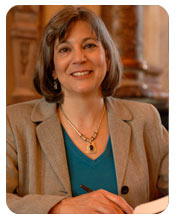 Few legislators have a record of conservative accomplishment to match Senator Susan Wagle. A lifelong resident of Wichita, she is now seeking to put her experience to work for all Kansans as your next Lieutenant Governor.
Susan first came to Topeka in 1990 as a member of the State House of Representatives. She quickly became a key Republican leader, rising to become the first woman to ever serve as Speaker Pro Tem by 1994. During her tenure in the House, Susan received the Guardian of Small Business Award from the National Federation of Independent Business and the Friend of Business Award from the Kansas Chamber of Commerce and Industry.
In 2000, Susan was first elected to the Kansas Senate. Now in her second term, she chairs the Senate’s Health Care Strategies Committee and serves on the Commerce Committee, Public Health and Welfare Committee and the Rules Committee.
Susan’s leadership skills are recognized beyond Kansas. She currently serves as Chair of the American Legislative Exchange Council, the Nations leading policy think-tank for conservative state legislators with over 2,400 elected officials in its membership. As National Chair, Susan networks with business leaders and elected officials from across the nation to develop policies that promote Jeffersonian principles and encourage free markets and limited government.
Susan lives in Wichita with her husband, Tom, and has four children. Julia has completed her second year as a medical student at Kansas City University of Medicine and Bio Science and she will marry Riley Scott in June. They plan to move to Washington D.C. where Riley works for U.S. Senator Sam Brownback. Andrea is a recent graduate of Avila University and she works as a nurse for K.U. Med in Kansas City. John is a graduate of Andover Central High School and will attend Kansas State University in the fall. Susan’s youngest son Paul went through a successful stem cell transplant for relapsed leukemia last year and has fully recovered. Paul is a sophomore at Andover Central High.
Susan and Tom are real estate investors and co-own a number of successful small businesses. Susan currently serves on the boards of directors for the Program of Integrative Medicine for the University of Kansas Medical Center and Victory in the Valley, a cancer support group in Wichita. Susan has served on boards for Youth Entrepreneurs of Kansas, Sedgwick County Mental Health Board and she is a member of the Wichita Independent Business Association and NFIB. She is a Cum Laude graduate of Wichita State University.

More Background On BarnettForGovernor.com
BarnettForGovernor.com served as the official digital headquarters for the 2006 gubernatorial campaign of Republican candidate Jim Barnett in Kansas. Designed during a transitional era for political campaigning on the internet, the site functioned primarily as a centralized information platform rather than an interactive or social media–driven hub. Its purpose was straightforward: to introduce voters to the candidate, articulate his policy positions, mobilize supporters, and provide an authoritative source for campaign messaging during the election cycle.
Unlike modern campaign websites that rely heavily on video, social media integration, and data-driven engagement tools, BarnettForGovernor.com reflected the norms of mid-2000s political communication. It emphasized long-form written explanations, issue clarity, and direct appeals to voters’ values and concerns. Today, the site exists primarily through archived versions, offering historians, political analysts, and voters a preserved snapshot of Republican campaign strategy in Kansas during this period.
Ownership, Governance, and Campaign Control
The website was owned and operated by the official Barnett for Governor campaign committee. As with most campaign websites of the era, it was managed internally by campaign staff or by consultants working directly for the candidate. All content published on the site reflected the campaign’s official positions and messaging strategy, making it an authentic primary source rather than a third-party interpretation.
Funding for the site came from campaign contributions and was subject to the same regulatory framework governing political expenditures in Kansas and at the federal level. This ensured that the site functioned not only as a messaging platform but also as a legally compliant fundraising and organizational tool.
Political Environment in Kansas During the 2006 Election
The 2006 Kansas gubernatorial race took place in a politically complex environment. While Kansas has long been associated with conservative politics at the federal level, statewide races—particularly for governor—have historically been more competitive. Voters in Kansas have often demonstrated a willingness to elect Democratic governors when those candidates are perceived as pragmatic, moderate, or effective administrators.
The incumbent governor in 2006 was a Democrat seeking reelection, and she entered the race with strong approval ratings and a reputation for bipartisan appeal. Jim Barnett’s campaign sought to challenge that record by emphasizing what he described as leadership failures, judicial overreach, and fiscal mismanagement.
BarnettForGovernor.com played a critical role in advancing this narrative by framing the election as a choice between two sharply different governing philosophies rather than a referendum on personality or incumbency alone.
Website Design and User Experience
From a design perspective, BarnettForGovernor.com was typical of mid-2000s political websites. The layout prioritized readability and accessibility over visual sophistication. Pages were text-heavy, with limited use of graphics or multimedia elements. Navigation menus directed users to issue statements, biographical information, press releases, and opportunities to volunteer or donate.
The absence of video streaming, interactive polling, or social media integration reflects both the technological limitations of the time and the campaign’s strategic focus. The site assumed that visitors were willing to read detailed policy explanations and that clarity of message was more persuasive than visual engagement.
Core Policy Themes Presented on the Site
Economic Development and Tax Policy
Economic issues formed the backbone of the campaign’s messaging. The website emphasized job creation, tax reduction, and business-friendly policies as essential to restoring Kansas’s economic competitiveness. Barnett argued that Kansas was falling behind neighboring states in attracting new businesses and retaining young workers.
His proposals included reductions in state income taxes, elimination of certain taxes on machinery and equipment, and incentives designed to encourage capital investment by businesses and farms. The site framed these policies as necessary not only for economic growth but also for preserving family-owned enterprises and rural communities.
Education Funding and Fiscal Responsibility
Education was another major focus of the site. Barnett presented himself as a strong supporter of public education while simultaneously criticizing existing funding approaches. He argued that increased education spending should be achieved without creating long-term budget deficits or raising taxes.
The website outlined a multi-year funding plan that emphasized accountability, targeted investment, and local control. This approach was framed as a responsible alternative to what the campaign described as unsustainable spending practices supported by the incumbent administration.
Judicial Reform and Constitutional Balance
One of the most distinctive elements of BarnettForGovernor.com was its extensive discussion of judicial issues. The campaign argued that the state’s highest court had exceeded its constitutional role by effectively dictating budgetary decisions, particularly in the area of education funding.
Barnett advocated for changes to the judicial selection process, proposing a system that would involve greater input from elected officials. The website framed this position as a defense of constitutional balance rather than an attack on judicial independence, appealing to voters concerned about separation of powers.
Agriculture and Rural Policy
Given Kansas’s agricultural heritage, the website devoted significant attention to issues affecting farmers and rural communities. Barnett emphasized his personal background connected to farming and presented policies aimed at reducing tax burdens on agricultural families.
Proposals included estate tax elimination, investment tax credits for farm equipment, and opposition to the use of eminent domain for economic development purposes. The site portrayed these positions as essential to preserving the independence and viability of family farms.
Social Values and Cultural Issues
BarnettForGovernor.com also clearly articulated conservative positions on social issues. These included opposition to abortion, support for parental notification laws, and defense of traditional definitions of marriage. The website did not soften or obscure these stances; instead, it presented them as reflections of widely held Kansas values.
This clarity served a dual purpose. It energized socially conservative voters while also providing transparency for voters who might disagree. In doing so, the site allowed individuals to make informed decisions based on clearly stated principles rather than ambiguous rhetoric.
Immigration and Public Policy
Immigration policy was addressed through a detailed, multi-point plan. The website emphasized opposition to benefits for undocumented immigrants, support for voter identification laws, and coordination with federal authorities on enforcement.
The campaign framed immigration primarily as an issue of fairness, legality, and public safety. While the tone was firm, the site presented the policy framework as comprehensive rather than reactionary, reflecting broader national debates occurring during that period.
Role of the Lieutenant Governor Candidate
The site also highlighted the candidacy of the running mate for lieutenant governor. Her extensive legislative experience, leadership roles, and involvement in healthcare and business organizations were emphasized as strengths that would complement the top of the ticket.
By dedicating substantial space to the lieutenant governor candidate, the site reinforced the idea of a cohesive governing team rather than a single personality-driven campaign.
Media Coverage and Public Reception
BarnettForGovernor.com was frequently referenced in local media coverage during the campaign, particularly when journalists analyzed policy positions or quoted directly from issue statements. While the site itself did not host third-party reviews, its content was often cited in news articles, opinion columns, and political debates.
The clarity of the site’s messaging made it a reliable reference point for both supporters and critics. This transparency contributed to informed public discourse, even among voters who ultimately opposed the campaign.
Audience and Intended Reach
The primary audience for BarnettForGovernor.com consisted of Kansas voters, particularly Republicans and undecided independents. Secondary audiences included journalists, political activists, donors, and party officials.
The site assumed a relatively engaged and informed readership, offering detailed explanations rather than simplified slogans. This approach reflected confidence in the candidate’s policy positions and a belief that voters valued substance over spectacle.
Cultural and Historical Significance
Today, BarnettForGovernor.com holds significance as a preserved example of early digital political strategy. It captures a moment when campaign websites were evolving from static brochures into more comprehensive communication platforms, yet had not fully embraced interactivity or social media.
For historians and researchers, the site offers insight into Republican priorities, messaging strategies, and voter outreach methods in Kansas during the mid-2000s. It also illustrates how campaigns used the internet to bypass traditional media filters and speak directly to voters.
Legacy and Archival Value
Although the campaign did not result in electoral victory, the website remains an important archival artifact. It demonstrates how political campaigns documented their platforms, framed opposition, and sought to mobilize supporters in an era before digital campaigning became ubiquitous.
BarnettForGovernor.com stands as a reminder that campaign websites are not merely tools for winning elections but also records of political thought, values, and debates at specific moments in time.
BarnettForGovernor.com was more than a campaign website; it was a comprehensive expression of a political philosophy and a strategic effort to reshape Kansas governance. Through detailed issue statements, clear ideological positioning, and an emphasis on leadership and accountability, the site provided voters with an unfiltered view of the candidate’s priorities.
As an archived digital artifact, it continues to offer value to anyone seeking to understand Kansas politics, Republican campaign strategy, or the evolution of online political communication in the early twenty-first century.